Meta’s Andromeda update introduced a sophisticated system that fundamentally changed how the platform evaluates creative uniqueness. Understanding how this detection system works is no longer optional for advertisers who want to maintain competitive performance. This technical deep-dive explores the mechanisms behind Andromeda’s similarity detection and reveals exactly how duplicate or near-duplicate creatives are penalized.
The Entity ID System: Meta’s Hidden Creative Fingerprint
At the core of Andromeda’s similarity detection lies a system called Entity ID. This is Meta’s internal identifier that groups creatives the platform considers visually or thematically similar, even when they have different Creative IDs in your Ads Manager.
Think of it this way: you might upload ten different ads with ten unique Creative IDs, but if Meta determines they look similar enough, all ten get assigned the same Entity ID. From the algorithm’s perspective, you haven’t given it ten options but you’ve given it one creative concept repeated ten times.
This grouping happens automatically through machine learning analysis. When you upload a new creative, Meta’s neural networks analyze multiple dimensions including visual composition, color schemes, lighting patterns, layout structure, subject matter positioning, background elements, on-screen text placement, video motion patterns for video ads, and thematic messaging.
If these elements align closely enough with existing creatives in your account, Meta assigns the same Entity ID rather than creating a new one. This has profound implications: all ads sharing an Entity ID pool their performance data together, compete for the same delivery opportunities, experience shared learning phases, and reach overlapping audience segments.
How Andromeda Organizes Your Creative Library
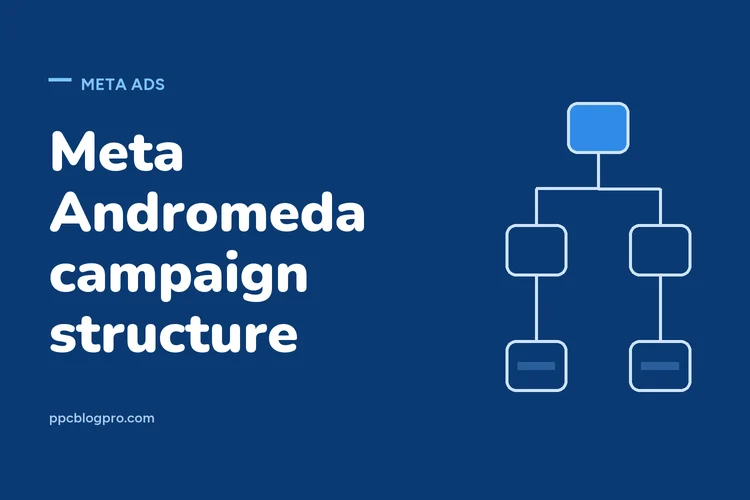
To understand similarity penalties, you need to understand how Andromeda organizes the millions of ads in Meta’s system. The platform uses a hierarchical tree-based structure, similar to a family tree or organizational chart.
At the top level are broad thematic branches representing general creative concepts like social proof, product-focused content, lifestyle imagery, or humor-based messaging. These branch into mid-level nodes representing more specific creative approaches within each theme. At the bottom are leaf nodes, which represent individual Entity IDs, groups of visually similar ads.
When a user opens Facebook or Instagram, Andromeda doesn’t evaluate every ad in Meta’s system. Instead, it traverses this tree structure based on the user’s behavioral signals, quickly narrowing from millions of ads down to a few thousand candidates in under 200 milliseconds. The retrieval system identifies which branches and nodes are most relevant to that specific user, then pulls representative creatives from those nodes.
This is where creative similarity becomes critical. If you provide ten nearly identical ads, they all cluster in the same leaf node. The retrieval system sees this as one creative concept, not ten distinct options. You’ve given Andromeda no additional nodes to explore, which means no additional audience discovery opportunities.
Conversely, when you provide truly diverse creatives exploring different themes, visual styles, and messaging angles, you create multiple unique leaf nodes. This expands the tree structure, giving Andromeda more pathways to explore and more opportunities to match your brand with relevant users.
The Similarity Detection Mechanisms
Meta employs multiple detection layers to identify creative similarity. Understanding what triggers these systems helps you avoid unintentional penalties.
Visual similarity detection analyzes the actual pixels and composition of your creative. Ads using identical images or videos are obvious matches, but the system goes much deeper. Images with similar layouts, lighting conditions, color palettes, subject positioning, and background elements trigger similarity flags even when the actual image files differ.
For example, product photography shot with consistent lighting, backgrounds, and angles may register as similar even when featuring different products. A clothing brand photographing all items as flat lays on white backgrounds with identical lighting will likely see all those creatives grouped under one Entity ID, regardless of which specific garment appears.
Structural similarity examines the organization and composition of creative elements. Ads with the same text placement, button positioning, overlay structures, and frame compositions are grouped together even with different underlying visuals. Two ads might use completely different photos, but if both overlay text in the top third, feature a product shot centered in the frame, and position a call-to-action button identically, Meta’s system recognizes them as structurally similar.
For video creatives, the first three seconds carry disproportionate weight in similarity detection. Meta has confirmed that videos sharing similar opening sequences are treated as nearly identical, even when the remaining content differs significantly. This means you can’t simply change the ending or middle section of a video and expect Meta to treat it as a new creative. The hook itself must be visually and thematically distinct.
Thematic similarity analyzes the conceptual message and emotional positioning of your creative. Ads communicating the same value proposition, targeting the same pain points, using similar emotional tones, or focusing on identical product benefits are grouped together even with different executions.
The Three-Tiered Penalty System
Andromeda doesn’t apply a single blanket penalty for similar creatives. Instead, it employs a progressive penalty structure that intensifies based on the degree of similarity and redundancy in your creative library.
At the first tier, reduced reach and increased competition occurs when Meta identifies multiple creatives with the same Entity ID. These ads compete against each other for delivery within the same audience pools. Rather than expanding your reach across different user segments, similar creatives cannibalize each other’s performance. You experience higher CPMs as your own ads compete in the same auctions, limited audience expansion since all similar creatives target the same user profiles, and fragmented spend distribution without performance gains.
The second tier involves learning phase penalties. When Meta assigns the same Entity ID to multiple ads, their performance data pools together, but in a counterproductive way. The algorithm receives confused signals about which specific execution is driving results. This extends the learning phase as Meta struggles to optimize delivery, creates inconsistent performance data that makes strategic decisions difficult, and results in slower optimization compared to accounts with diverse creative.
The third and most severe tier is algorithmic suppression. When Andromeda detects significant creative redundancy across an ad account, it may actively suppress delivery of the duplicate-flagged creatives. Ads identified as redundant variations receive severely limited distribution regardless of bid amounts, experience dramatically higher cost per result compared to unique creatives, and may receive zero spend allocation in favor of more distinct creative assets. This is the punishment mechanism some advertisers discovered when new creatives received no spend despite adequate budgets. If Meta’s system flagged them as too similar to existing ads, they simply weren’t entered into the retrieval phase at all.
What Actually Triggers Similarity Flags
Based on Meta’s guidance and advertiser testing, certain patterns consistently trigger similarity detection. Recognizing these helps you audit your creative library for risk factors.
Minor copy variations rank as the most common trigger. Changing headlines, descriptions, or call-to-action buttons while keeping visual elements identical creates creatives with different Creative IDs but the same Entity ID. This was the foundation of old-school A/B testing methodologies, but under Andromeda, these variations no longer count as distinct creatives.
Consistent brand aesthetics present a more nuanced challenge. While brand consistency is valuable, maintaining identical visual treatments across all creatives can trigger similarity flags. Using the same models, locations, lighting setups, color grading, filters, or composition styles across different ads makes them appear identical to the algorithm even when the specific products or messages differ.
Template-based creative production often generates similarity penalties. Using design templates with fixed layouts, reusing the same video editing structures with different footage, or applying consistent motion graphics packages creates structural similarity that Meta’s system detects. The problem isn’t the template itself, it’s creating dozens of ads from the same template with only superficial changes.
User-generated content from the same creator can also trigger flags when a creator films multiple testimonials or demonstrations in the same setting, wearing similar clothing, using consistent framing and lighting. Even with different scripts, Meta may group these together under one Entity ID because the visual and structural signatures are too similar.
The Creative Similarity Report: Making the Invisible Visible
Meta has begun rolling out tools to help advertisers understand how the platform perceives their creative diversity. The Creative Similarity Report, accessible through Ads Manager under Analyze and Report, provides three key metrics.
The Creative Fatigue score identifies when specific audiences have seen your creatives too many times. High fatigue indicates declining efficiency and suggests your ad needs refreshing or replacement with a more distinct variation. This differs from similarity as fatigue measures overexposure to the same audience, while similarity measures how alike your different ads appear to Meta’s algorithm.
The Creative Similarity Score detects when you’re running visually or conceptually similar ads that compete against each other. This metric effectively serves as a proxy for Entity ID overlap, since Meta hasn’t made Entity IDs directly visible to advertisers. A high similarity score indicates your creative library lacks meaningful diversity, which likely results in multiple ads sharing Entity IDs.
Top Creative Themes categorizes your ads into groups like lifestyle content, product-focused messaging, testimonials, humor, social proof, or savings-oriented offers. This breakdown shows how Meta’s algorithm perceives your creative positioning and helps identify gaps in your thematic diversity. If 90% of your budget concentrates in a single theme category, you’re probably not giving Andromeda enough diverse nodes to explore.
How to Structure Creative for Entity ID Diversity
Creating genuinely unique Entity IDs requires moving beyond superficial variations to meaningful creative differentiation. The goal is generating distinct visual, structural, and thematic signatures that Meta’s algorithm recognizes as separate concepts.
Visual distinctiveness means making bold changes to the core elements Meta’s neural networks analyze. For product photography, shoot in different environments like outdoor versus indoor settings, studio versus lifestyle contexts, or bright versus dark atmospheres. Vary your camera angles significantly with overhead shots versus eye-level versus ground-level perspectives. Change your composition approaches entirely with centered subjects versus rule-of-thirds framing or symmetrical versus asymmetric layouts.
For video content, the first three seconds demand particular attention since this window disproportionately influences Entity ID assignment. Create completely different opening hooks with distinct settings, different on-screen talent, varied camera movements, alternative color grading, and unique visual or audio patterns. A winning video can be given new life by completely reimagining those opening seconds while maintaining the effective body and conclusion.
Structural diversity requires rethinking how creative elements are organized and presented. Alternate between formats with static images, videos, carousels, and collection ads. Vary text overlay positions, placing copy at top versus bottom versus integrated throughout. Change your information hierarchy, leading with different elements like product features, customer benefits, social proof, or promotional offers.
Thematic diversity means exploring different strategic angles within your marketing message. Rather than repeatedly emphasizing the same benefit, create separate creative tracks addressing different customer motivations, pain points at various awareness stages, emotional versus rational purchase drivers, and aspirational versus practical positioning.
Strategic Implications for Campaign Structure
Understanding Entity ID dynamics changes how you should structure campaigns for optimal performance under Andromeda. The old approach of creating multiple ad sets with similar creative no longer serves your goals.
Consolidate around creative themes rather than audience segments. Instead of separate ad sets for different demographics each running similar product shots, create ad sets organized around creative approaches with each ad set containing 10-15 truly diverse executions exploring one thematic territory. This gives Andromeda a portfolio of distinct Entity IDs to work with while maintaining strategic organization.
Prioritize creative production over audience research. The time previously spent building detailed audience segments and testing targeting combinations should shift toward developing diverse creative concepts, shooting in varied locations and styles, working with multiple content creators, and testing different messaging frameworks.
Implement systematic creative refresh cycles. Rather than letting ads run until performance degrades, establish proactive replacement schedules. Plan for new creative concepts every two to three weeks, not just refreshes of existing concepts. Build creative production pipelines that can generate genuinely diverse content at scale.
The Future of Creative Similarity Detection
Meta continues evolving its similarity detection capabilities. As the system matures, expect even more sophisticated analysis. The platform will likely develop deeper semantic understanding of messaging, detecting when different words communicate identical concepts. Audio similarity detection for video ads may analyze voiceovers, music, and sound design in addition to visuals. Cross-format similarity detection might group together a static image, video, and carousel when they communicate the same core message despite different formats.
Meta may eventually make Entity IDs visible to advertisers, providing direct insight into how the platform groups your creative library. Until then, the Creative Similarity Score serves as your primary diagnostic tool.
Conclusion: Embrace True Creative Diversity
Andromeda’s similarity penalties exist for a reason. The system rewards advertisers who provide genuinely diverse creative options that help Meta’s algorithm personalize ad delivery across different user preferences, contexts, and motivations. Superficial variations no longer deliver value to Meta’s delivery system or to advertisers’ performance.
The path forward requires shifting from an optimization mindset focused on incremental testing to an innovation mindset focused on creative exploration. Stop asking “How can I tweak this winning ad?” and start asking “What completely different approach might also work?” Your performance under Andromeda depends on it.
Read more on this topic:
Meta’s Andromeda Update: The Complete Guide
Meta Andromeda Campaign Structure
The Death of Manual Targeting: Why Meta’s Andromeda Makes Creative Your New Audience