Meta’s latest algorithm update, Andromeda, marks a seismic shift in how advertisers should approach Facebook and Instagram campaigns. After years of perfecting audience targeting strategies, building lookalike audiences, and segmenting users into precise demographics, Meta is fundamentally changing the rules. The era of manual targeting is ending, and creative has become your new audience.
What is Meta’s Andromeda Update?
Andromeda represents Meta’s most significant advertising algorithm change since the iOS 14 privacy update disrupted tracking in 2021. Unlike that disruptive change, Andromeda is transformative in a different way. It shifts Meta’s AI-powered delivery system toward creative-led growth, where the quality and diversity of your ad creative matters more than the audience parameters you manually set.
The update leverages advanced machine learning to analyze ad creative at a granular level, understanding not just basic attributes like format or copy length, but the actual themes, emotions, value propositions, and visual elements within each ad. This allows Meta’s system to match your creative with the right users based on what will resonate with them, rather than relying on your manual audience selections.
The Old Playbook is Broken
For years, successful Meta advertisers followed a familiar formula. Build detailed buyer personas, create custom audiences from website visitors, layer on interest targeting, test lookalike audiences at different percentages, and segment campaigns by demographics. This approach worked because advertisers had more information about user behavior than Meta’s algorithm could effectively leverage.
That dynamic has reversed. Meta’s AI now processes billions of data points across user behavior, creative performance, and conversion patterns in real-time. The algorithm can identify which specific creative elements will resonate with individual users better than any manual targeting strategy. When you narrow your audience with detailed targeting, you’re actually limiting the algorithm’s ability to find your best customers.
Early adopters who have embraced Andromeda’s creative-first approach are seeing performance improvements averaging eight to ten percent. Meanwhile, advertisers clinging to complex audience segmentation strategies are experiencing stagnant or declining results.
Creative is Now Your Audience Signal
Under Andromeda, your creative doesn’t just attract attention within a predefined audience. Your creative defines who sees your ads. Each piece of creative content acts as a signal that tells Meta’s algorithm which users to target based on their likelihood to engage and convert.
Think of it this way. If you create an ad highlighting sustainability and eco-friendly materials, Andromeda’s AI identifies users who have demonstrated interest in environmental topics through their behavior across Meta’s platforms, regardless of whether you manually targeted those interests. If you create another ad focusing on premium quality and luxury, the algorithm finds users who respond to luxury positioning, even if they’ve never explicitly liked a luxury brand page.
This means your creative strategy has become your targeting strategy. The themes, messaging, visuals, and value propositions you test through creative are how you explore different audience segments. Instead of creating one ad and testing it across five audience groups, you should create five diverse ads and let Meta’s algorithm find the right audience for each.
The New Creative Requirements
Andromeda doesn’t just change how creative works, it changes how much creative you need. The algorithm rewards advertisers who provide diverse creative options, typically recommending fifteen or more distinct ad variations per campaign compared to the previous standard of three to five winning ads.
This isn’t about making superficial changes like swapping headlines or button colors. Andromeda’s AI can detect creative similarity and may penalize ads that are too similar by limiting their distribution. True creative diversity means exploring different angles, formats, messaging approaches, visual styles, and value propositions.
Some effective creative diversity strategies include testing different customer pain points in separate ads, showcasing various product use cases or benefits, using different content formats like user-generated content versus professional photography, experimenting with educational content versus emotional storytelling, and creating ads that speak to different stages of customer awareness.
The goal is to give Meta’s algorithm multiple tools to find your ideal customers across different mindsets, needs, and preferences.
How to Structure Campaigns for Andromeda
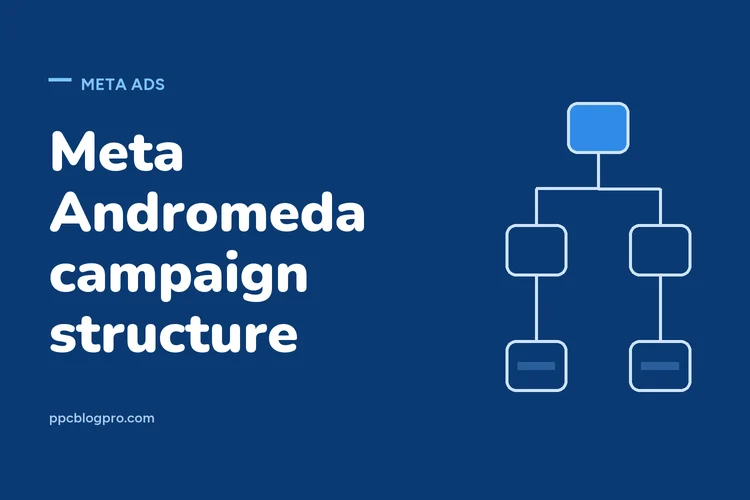
Campaign structure has also evolved under Andromeda. The old approach of creating separate campaigns for different audience segments no longer serves you. Instead, consolidation is key.
Start with broader targeting parameters or even completely open targeting for prospecting campaigns. This gives the algorithm maximum flexibility to find your best customers based on creative signals rather than artificial constraints. Use campaign budget optimization to let Meta allocate spending to the best-performing ad and audience combinations automatically.
Focus your campaign structure around creative themes rather than audience segments. For example, instead of separate campaigns for different age groups or interests, create campaigns organized around different product benefits, customer testimonials versus product features, or seasonal promotions versus evergreen content.
Keep your conversion tracking and Meta Pixel implementation solid, as quality conversion data feeds the algorithm and helps it optimize delivery. The Conversions API is particularly important for ensuring Meta has complete signal data to power Andromeda’s matching capabilities.
The Skills Advertisers Need Now
This shift demands different skills from advertisers. Less time should be spent researching audience interests, building complex targeting combinations, and analyzing demographic breakdowns. More time should be invested in developing diverse creative concepts, understanding creative performance patterns, testing different messaging angles, and analyzing which creative elements drive results.
The best Andromeda-era advertisers think like content creators and brand strategists, not just media buyers. They understand storytelling, visual communication, and how to communicate value propositions in multiple ways. They build creative production systems that can generate diverse content efficiently rather than perfecting a single hero ad.
What This Means for Different Advertiser Types
For small businesses and SMEs, Andromeda is actually democratizing. You no longer need sophisticated audience research tools or extensive customer data to compete. Strong creative can help you reach the right people even with limited budgets. Focus on authentic, diverse creative that showcases your unique value.
For e-commerce brands, product-focused creative diversity becomes critical. Instead of one perfect product photo, test lifestyle shots, user-generated content, comparison visuals, and different use cases. Let creative show your products to different customer segments rather than manually defining those segments.
For B2B advertisers, this shift challenges the assumption that narrow targeting is necessary. While B2B audiences are smaller, Andromeda can identify decision-makers based on creative signals like problem-solution framing, industry-specific language, and professional value propositions. Broad targeting with industry-relevant creative often outperforms narrow job title targeting.
The Bottom Line
Meta’s Andromeda update represents a fundamental philosophical shift in digital advertising. The platform is telling advertisers to trust its AI-powered delivery system and focus on what humans do best: creating compelling, diverse content that resonates with different customer needs.
Manual targeting isn’t completely dead, and there are still scenarios where some targeting parameters make sense, particularly for highly localized campaigns or very specific product categories. But for most advertisers, the winning strategy is clear: broaden your targeting, diversify your creative, and let Andromeda’s algorithm find your customers.
The advertisers who thrive in this new environment will be those who embrace creative as their primary strategic lever. Your audience isn’t in the targeting menu anymore. It’s in the ads you create.
Read more on this topic: